🧡 The Role and Cost of Foster Parenting in 2026
Foster parents remain critical in caring for children who can’t live with their biological parents. While their primary motivation is compassion and support, foster care also involves financial responsibilities. To help with these costs, each U.S. state sets its own per-diem payment rates, which can vary by child age and level of need—such as infants, toddlers, or children requiring additional services like behavioral, emotional, or medical support.
📅 National & State-by-State Payment Overview (2026)
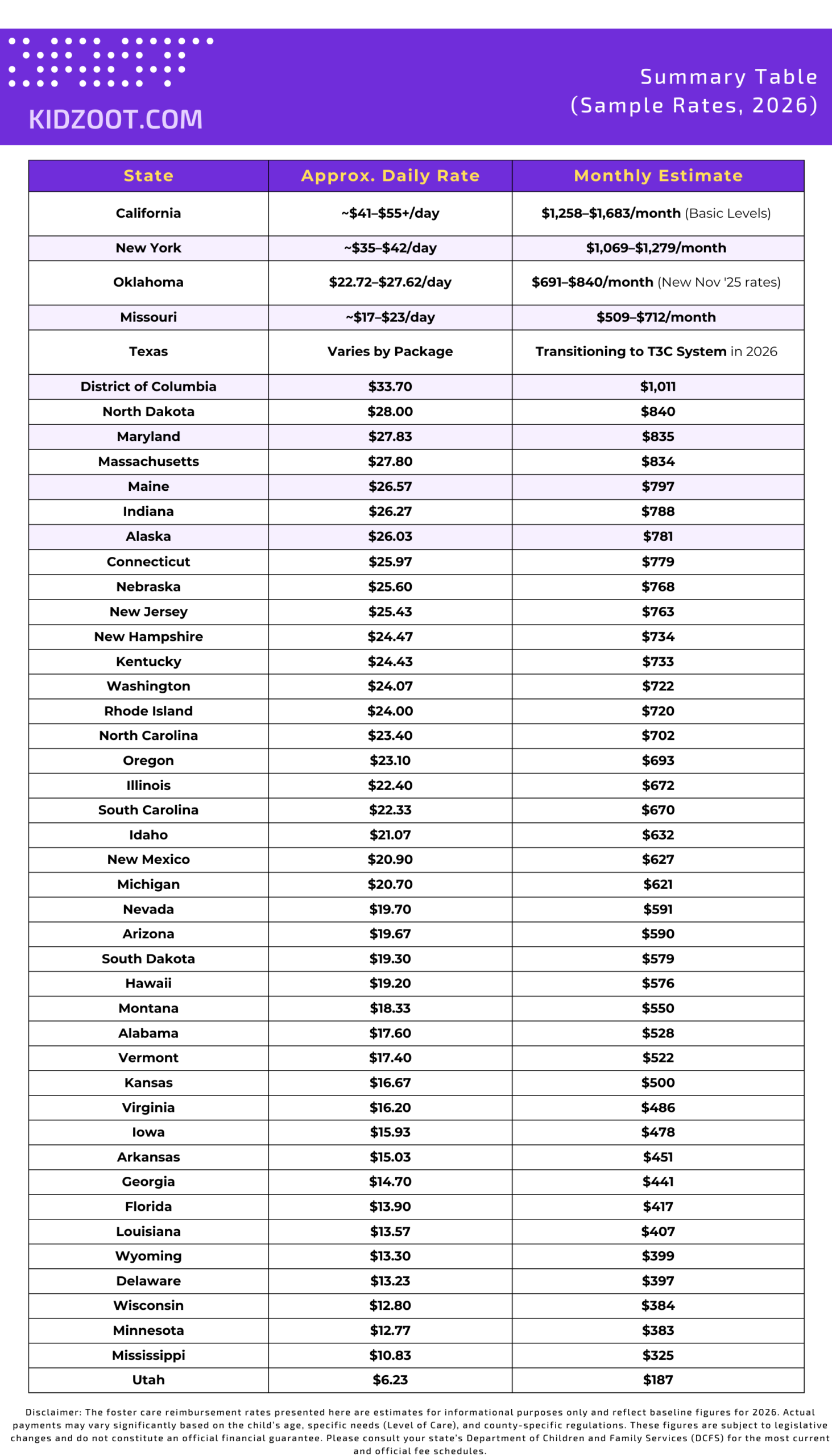
In 2026, foster care stipends continue to show significant variation across states. A review of current rates reveals the widening gap between high-cost-of-living states and others:
California: ~$1,301/month (estimated ~3.4% increase from previous $1,258 base, effective July 2025)
New York: ~$1,069–$1,279/month, varying by age and region
Massachusetts: ~$834–$987/month
Idaho: ~$632–$759/month
Texas: Transitioning to T3C model; base rates historically ~$400/month but evolving
These figures reveal a strong disparity, ranging from about $13 to over $43 per day, depending on the state.
📈 Recent 2026 Rate Updates by State
Oklahoma (Effective Nov 1, 2025):
Following the passage of HB 2030, Oklahoma’s rates have increased to better support foster families:
$22.72/day (~$691/month) for ages 0–5
$25.42/day (~$773/month) for ages 6–12
$27.62/day (~$840/month) for ages 13+
Missouri:
Current standard maintenance rates (following the April 2025 adjustment) are set to:
$509/month for children aged 0–5
$577/month for ages 6–12
$712/month for ages 13+
Texas (2026 Reform):
Texas is currently in its first full year of transitioning to the Texas Child-Centered Care (T3C) system. This moves away from traditional service levels to a package-based model designed to better match payments with a child’s specific needs.
California (2025-2026 Fiscal Year):
California implemented a 3.42% California Necessities Index (CNI) increase effective July 1, 2025. The basic Level 1 rate is now established at $1,258/month, with higher tiers (Level 2–4) ranging from $1,399 to $1,683/month.
🌐 National & Regional Trends
Rising Daily Averages: The estimated national average daily rate has nudged upward to approximately $34–$36/day ($1,030–$1,100/month) to account for inflation, though rural areas often remain lower.
Shift to Needs-Based Models: 2026 sees more states moving away from simple age-based brackets. Texas’s T3C and California’s established Level of Care (LOC) protocol reflect a national shift toward compensating based on the intensity of care required rather than just the child’s age.
💡 What This Means for Foster Families
Wide Disparities: Foster care compensation remains highly unequal geographically, with a gap of over $800/month between the highest and lowest paying states.
Needs-Based Adjustments: Families caring for children with therapeutic or medical needs can often access significantly higher tiers of support (e.g., California’s Intensive Services rate exceeds $3,200/month).
Future Reforms: Expect continued legislative pushes in 2026–27 to tie foster stipends to local cost-of-living indices, similar to California’s CNI adjustments.
✅ Recommended Actions for Foster Parents
Verify New Tiers: If you live in a state like Texas undergoing reform, check with your agency to understand how your child’s “service package” is determined under the new model.
Inquire about “Extras”: With base rates often lagging behind inflation, ask about separate allowances for clothing, school supplies, and holiday gifts, which are distinct from the daily stipend.
Track Legislative Changes: States like Oklahoma have recently proven that legislative advocacy can lead to direct rate increases. Stay informed on bills in your state.
In Conclusion
As we move through 2026, foster care payments continue to vary wildly by location. While states like Oklahoma and California have implemented recent increases to combat inflation, others are undertaking structural overhauls to better serve children’s needs. Foster caregivers should always verify their specific classification and rate tier with their local caseworker to ensure they are receiving the correct support.