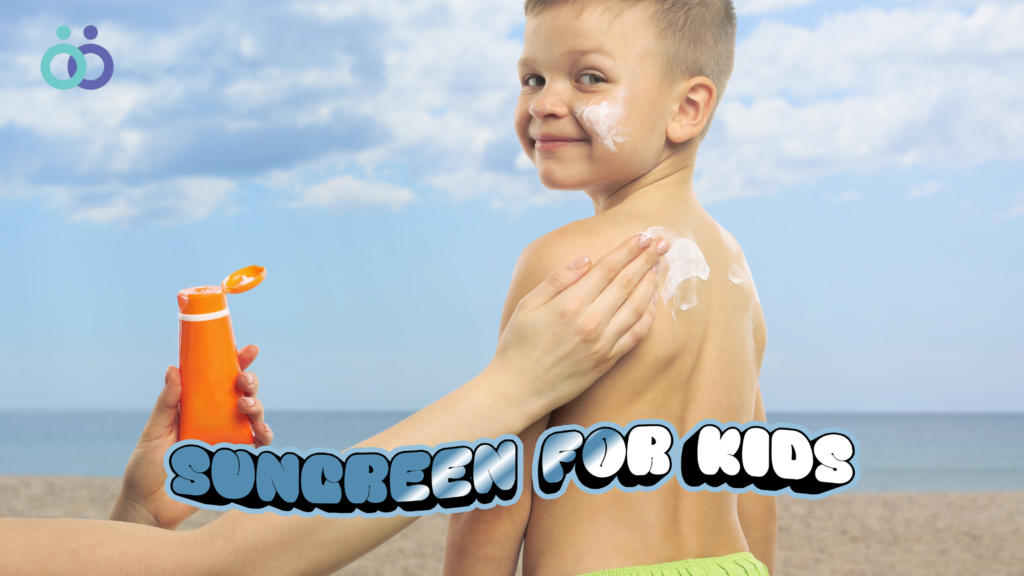
Let’s have an honest, no-fluff conversation about something most parents do every single day — putting sunscreen on their kids — without truly understanding what they’re applying.
You’ve probably stood in the sunscreen aisle, stared at thirty different bottles, picked the one with the cartoon character on it, and called it a day. Same. But here’s the thing — some of what’s inside those cheerful bottles deserves a much closer look. And some of what most sunscreen blogs don’t tell you could actually change how you shop forever.
So grab a cup of coffee), and let’s get into it — the good, the hidden, and the absolutely essential.
Why Kids' Skin Is a Completely Different Story
Before we jump into product lists, let’s talk about why kids need a different sunscreen conversation altogether.
Children’s skin is biologically thinner and more permeable than adult skin. That means whatever you put on the surface has a much higher chance of being absorbed into their body. This is not a scare tactic — it’s basic biology. And it becomes very relevant once you understand what certain sunscreen chemicals actually do once they cross the skin barrier (more on that in a minute).
Also, here’s a stat that should immediately matter to you as a parent: UV damage is cumulative. The American Academy of Dermatology has long established that the sun exposure a child receives in their first 18 years of life contributes significantly to their lifetime risk of skin cancer. One blistering sunburn in childhood more than doubles the risk of melanoma later in life. This is not just a summer problem — it’s a lifetime investment.
The Shocking Truth About SPF Numbers Nobody Talks About
Here’s a hidden insight that most blogs completely skip over: SPF numbers on kids’ sunscreens are basically marketing.
Let me explain. When sunscreen manufacturers test their products, they apply them at a density of 2 mg per cm² of skin. That’s a very specific, very generous amount. As Carroll & Vreeman point out, following that standard would mean using almost an entire six-ounce bottle of sunscreen per day at the beach.
Now here’s the really eye-opening part. A clinical crossover study published in a peer-reviewed journal specifically tracked how much sunscreen children themselves actually apply. The result? Kids apply sunscreen at a median thickness of just 0.48 mg/cm² — less than one-quarter of the amount used during SPF testing. So if your child picks up the SPF 50 bottle and applies it themselves, they’re likely only getting the protection equivalent of about SPF 12–15.
The same study found that the dispenser type matters enormously: kids using pump dispensers applied 0.75 mg/cm², while kids using roll-ons only managed 0.22 mg/cm². This means the packaging your sunscreen comes in can literally halve or double your child’s actual sun protection.
Practical takeaway: Always apply sunscreen to your child yourself (especially for younger kids), use a pump-type dispenser, and don’t be stingy with the amount. If a bottle of sunscreen lasts all summer, you’re probably not using enough.
The SPF 50+ Myth (Yes, It's a Myth)
While we’re talking SPF, let’s bust another one. Brands love to slap SPF 70, 80, or even 100+ on kids’ sunscreens. It sounds safer. It feels like you’re doing more for your child.
But the American Academy of Pediatrics (AAP) and the American Academy of Dermatology (AAD) both agree: SPF 30–50 is sufficient for children. A peer-reviewed study published in Cureus (2023) found that sunscreen products marketed specifically to pediatric populations overwhelmingly exceeded SPF 50, even though no additional meaningful protection beyond that range has been proven. The researchers specifically noted that “more research studies are needed to test if sunscreen with more than SPF 50 offers any extra protection”.
What does SPF 50 actually give you? It blocks approximately 98% of UVB rays. SPF 100 blocks 99%. That 1% difference is statistically negligible in real-world conditions, especially since most people don’t apply enough anyway. What you’re really paying for with those inflated SPF numbers is clever marketing.
What's Actually IN Your Kid's Sunscreen (The Uncomfortable Part)
This is the section most sunscreen brand-sponsored blogs will never write. Let’s change that.
The Blood Absorption Problem
In 2019 and 2020, the U.S. Food and Drug Administration (FDA) published two landmark studies in the Journal of the American Medical Association (JAMA). The findings were significant: six common chemical sunscreen ingredients — avobenzone, oxybenzone, octocrylene, homosalate, octisalate, and octinoxate — were absorbed into the bloodstream after just one day of use, and their plasma concentrations exceeded the FDA’s own safety threshold.
The most alarming finding? Oxybenzone was absorbed “very quickly and at the highest level” of all the chemicals tested. And the concentration in the blood increased with each day of continued application. On children’s thinner, more permeable skin, these absorption levels are expected to be even higher.
To be fair, the FDA was careful to note that these findings don’t mean people should stop using sunscreen. The point is that more safety research is needed — particularly for children.
The Hormone Disruption Concern
Oxybenzone has been detected in blood, urine, and even breast milk of sunscreen users. Lab studies have linked it to suspected endocrine-disrupting effects. While the debate continues among scientists about real-world significance, the fact remains that pediatric dermatologists and toxicologists consistently recommend avoiding oxybenzone-containing products for children as a precautionary measure.
Another chemical to watch for is 4-Methylbenzylidene Camphor (4-MBC) — this one is actually banned in the European Union as an endocrine disruptor, yet it still appears in children’s sunscreens in other markets. A toxicology report flagged that even products labeled specifically as “Kids Sunscreen” from major brands contained 4-MBC at maximum permitted concentrations.
Then there’s Octocrylene, which is listed as a known pediatric skin sensitizer and has been identified as an allergen. The same toxicology report noted that it appears in many popular kids’ sunscreen formulas despite these concerns.
The Benzene Contamination Nobody Warned You About
Here’s something genuinely alarming that most parents have never heard about: benzene, a known human carcinogen, has been found contaminating some commercially sold sunscreens. This isn’t an ingredient intentionally added — it’s a contamination issue during manufacturing. The FDA has issued warnings about this. It’s another reason to do your homework on brands and not just trust the label.
The Ingredient Stat That Should End the Debate
A European analysis found that 63% of ingredients in the most popular sunscreens are classified as dangerous for human health and/or the environment. Chemical UV filters have even been linked to Hirschsprung’s disease, a digestive birth defect, when detected in the system. This is not fringe science — it’s published, peer-reviewed data that most sunscreen marketing conveniently ignores.
Mineral vs. Chemical Sunscreen: The Final Verdict for Kids
After everything above, the answer becomes pretty clear. For children, mineral sunscreens (using Zinc Oxide and/or Titanium Dioxide) are the gold standard — and this is now the expert consensus across pediatric dermatologists and toxicologists worldwide.
Here’s why mineral wins for kids, point by point:
They sit on the skin’s surface and physically reflect UV rays rather than being absorbed into the skin or bloodstream
They work immediately upon application — no waiting 15–20 minutes like chemical sunscreens require
They’re far less likely to cause allergic reactions or eye stinging, making application battles with toddlers slightly less of a war
They are non-comedogenic, meaning they won’t clog pores — important for tweens and teens starting to worry about acne
Zinc oxide protects against both UVA and UVB rays (broad spectrum) in a single ingredient
The one downside parents often mention? The white cast. Many older mineral formulas leave a visible white layer, especially on darker skin tones. However, newer formulations have dramatically improved on this. Look for products labeled “tinted” or “sheer mineral” — these use micronized zinc oxide that blends much more seamlessly.
One important note: Look for “non-nano” zinc oxide formulas. Nano-sized zinc particles are small enough to potentially penetrate the skin barrier, which defeats the purpose. Non-nano particles stay on the surface where they belong.
The Best Sunscreens for Kids (Dermatologist-Approved Picks)
Best for Babies (0–12 months)
Babo Botanicals Sensitive Baby SPF 50 — fragrance-free, mineral-only formula designed for the most delicate skin
La Roche-Posay Anthelios Mineral SPF 50 — consistently top-ranked by dermatologists for its smooth application and creamy texture
Blue Lizard Baby Mineral Sunscreen Stick SPF 50+ — great for applying around ears and face without mess
Best for Toddlers & Young Kids (1–7 years)
Babyganics Mineral Sunscreen Lotion SPF 50+ — gentle formula, widely available, great for sensitive skin
Think Kids Safe Sunscreen SPF 50+ — reef-safe, water resistant, no harsh chemicals
Bare Republic Mineral SPF 50 Sunscreen Stick — easy stick format that kids can actually apply themselves (with supervision)
Best for School-Age Kids & Tweens (8–14 years)
EltaMD UV Pure Broad Spectrum SPF 47 — dermatologist favorite, works well on sensitive or eczema-prone skin
Neutrogena Pure & Baby Mineralscreen SPF 50 — affordable, zinc-based, widely available in India at pharmacies
Pipette Mineral Sunscreen SPF 50 — clean formula with squalane for extra skin-nourishing benefit
How to Actually Apply Sunscreen (Most Parents Are Doing This Wrong)
Most parents get the buying right but the applying wrong. Here’s what the research says:
Apply sunscreen at least 15 minutes before going outside for chemical sunscreens. Mineral sunscreens work immediately, but 15 minutes still helps ensure even coverage
The “two finger” rule: Apply two finger-lengths of sunscreen for each body area (face, neck, each arm, chest, abdomen, each leg, back)
Reapply every 2 hours, even on cloudy days, even with water-resistant formulas — UV rays don’t care about clouds
Don’t forget the tops of the ears, back of the neck, back of the hands, and the tops of feet — the spots that always get missed
For school-age kids, teach them the routine early. But always check their application — the study proves kids consistently under-apply
The Sunscreen Is Not Enough Conversation
Here’s something most sunscreen blogs will never tell you, because they’re trying to sell you sunscreen: sunscreen alone is not complete sun protection for kids.
UPF (Ultraviolet Protection Factor) clothing, wide-brimmed hats, and shade-seeking between 10 AM and 4 PM (peak UV hours) are equally important parts of the equation. A UPF 50 shirt blocks 98% of UV rays — the same as a good SPF 50 sunscreen, without the reapplication hassle or chemical concerns.
Think of it as a layered defense:
Clothing first (UPF-rated when possible)
Hat always (wide brim, not just a cap)
Sunscreen on all exposed skin
Shade during peak hours
Sunscreen is the backup, not the only plan.
The New Ingredient Coming That Could Change Everything
Here’s a forward-looking insight most blogs haven’t covered yet: In November 2025, the FDA proposed adding bemotrizinol to the approved list of sunscreen active ingredients in the United States. This ingredient has already been widely used in Europe and Asia for years and is notable because it offers broad-spectrum UVA and UVB protection with very low absorption rates — addressing the bloodstream absorption concerns discussed earlier.
If approved, this could represent a significant upgrade for parents in the US who want chemical sunscreen convenience without the absorption worries. Keep an eye on this development in 2026.
What to Look For on the Label (Quick Cheat Sheet)
Next time you’re at the store, scan the label for these non-negotiables:
✅ LOOK FOR:
Zinc Oxide and/or Titanium Dioxide as the only active ingredients
“Non-nano” on the label
Broad Spectrum (protects against both UVA and UVB)
SPF 30–50 (no need to go higher)
Fragrance-free and paraben-free
Water-resistant (80 minutes for active kids)
Dermatologist or pediatrician tested
❌ AVOID:
Oxybenzone (especially for young children)
Octocrylene (a known skin sensitizer for kids)
Homosalate, Octinoxate, Avobenzone in children’s formulas
4-Methylbenzylidene Camphor (4-MBC)
Added fragrances and parabens
Any product without “Broad Spectrum” on the label
The Bottom Line for Parents
You’re not doing this wrong — you’re doing it with incomplete information. And that’s exactly what the sunscreen industry has counted on for years.
The science is clear: mineral sunscreens with zinc oxide are the safest, most effective choice for children, regardless of what the marketing on a more expensive chemical SPF 90 bottle claims. Pair that with the right application technique, the right dispenser type, the right amount, and a hat on your kid’s head — and you’ve genuinely done your best for their skin, both today and for decades to come.
Sun protection is one of the simplest, highest-return health investments you can make for your child. You just have to know what you’re actually buying.
Always consult your child’s pediatrician or a board-certified dermatologist for specific skin conditions or concerns. The information in this blog is research-based and educational.

kidzoot